5 Daily Exercises: as people age, maintaining muscle mass becomes more challenging. Experts say that after the age of 55, natural muscle loss (often linked to aging and reduced activity) can gradually weaken strength, balance, and overall mobility. However, fitness professionals emphasize that the right type of daily movement can help rebuild muscle and improve functional strength—even without relying heavily on traditional gym machines.
Recent fitness guidance highlights that compound movements (multi-joint exercises) tend to activate more muscle fibers than machine-based workouts. These exercises require the body to stabilize and coordinate multiple muscle groups at once, which may stimulate greater muscle engagement and overall strength development.
Below are five widely recommended exercises that experts say can help older adults rebuild muscle more efficiently when performed consistently and with proper form.
1 – Dumbbell Romanian Deadlift (Posterior Chain Builder)
The Romanian Deadlift focuses on the body’s posterior chain, including the glutes, hamstrings, and spinal stabilizers. These muscles often weaken with age, which can affect posture and mobility.
By hinging at the hips while keeping the spine neutral, this exercise helps strengthen the lower body while improving stability. Trainers say this movement teaches the body to generate force from the ground up—something that many machine exercises fail to replicate.
2 – Standing Dumbbell Reverse Lunge (Lower-Body Strength & Balance)
The Reverse Lunge challenges one leg at a time, which increases muscle activation and helps improve balance. Unlike some forward lunges, stepping backward can reduce stress on the knees while still targeting the quads and glutes.
Fitness professionals often recommend this movement because it mimics everyday activities such as stepping, climbing stairs, or walking uphill—making it a functional strength exercise.
3 – Dumbbell Push Press (Upper-Body Power Move)
Upper-body muscle mass tends to decline faster with age. The Push Press helps address this by combining leg drive with an overhead press, targeting the shoulders, triceps, and core.
Unlike seated shoulder machines, this movement integrates multiple muscle groups at once. Experts say the coordinated motion increases overall muscle recruitment and may support better strength gains.
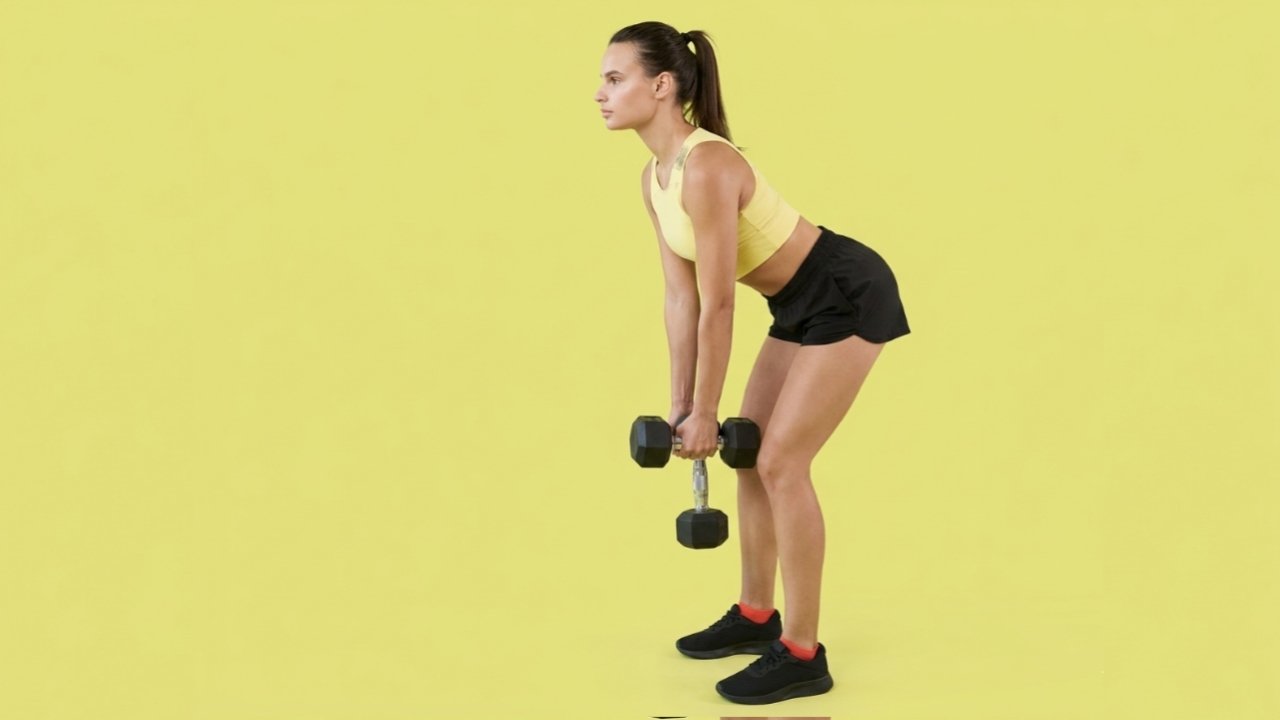
4 – Dumbbell Bent-Over Row (Posture and Back Strength)
Strong back muscles are essential for posture and daily movement. The Bent-Over Row trains the upper back, lats, and shoulder stabilizers while forcing the core and hips to support the body.
Because it requires stabilization during the pull, it may engage more muscle fibers compared with some machine rows that guide the movement path.
5 – Dumbbell Front Squat (Full-Body Muscle Activation)
The Front Squat is considered one of the most effective compound exercises for rebuilding muscle. Holding weights at shoulder height increases the demand on the core and upper back while targeting the quads and glutes.
Experts say front-loaded squats encourage better posture and full-body engagement, making them more functional than isolated machine-based leg exercises.
Why Consistency Matters After 55
Fitness experts stress that regular resistance training and consistent daily movement play a key role in rebuilding muscle over time. Short workouts that target large muscle groups can deliver steady progress without excessive fatigue or injury risk.
Simple habits—such as practicing proper form, gradually increasing resistance, maintaining adequate protein intake, and allowing enough recovery—can further support muscle development and long-term strength.
Bottom Line
While gym machines can be useful, many trainers believe that compound exercises using free weights or bodyweight may offer greater muscle activation and functional benefits for adults over 55. When performed safely and consistently, these five movements could help support strength, balance, and muscle rebuilding over time.
Note: Individuals with medical conditions or injuries should consult a healthcare or fitness professional before starting a new exercise routine.