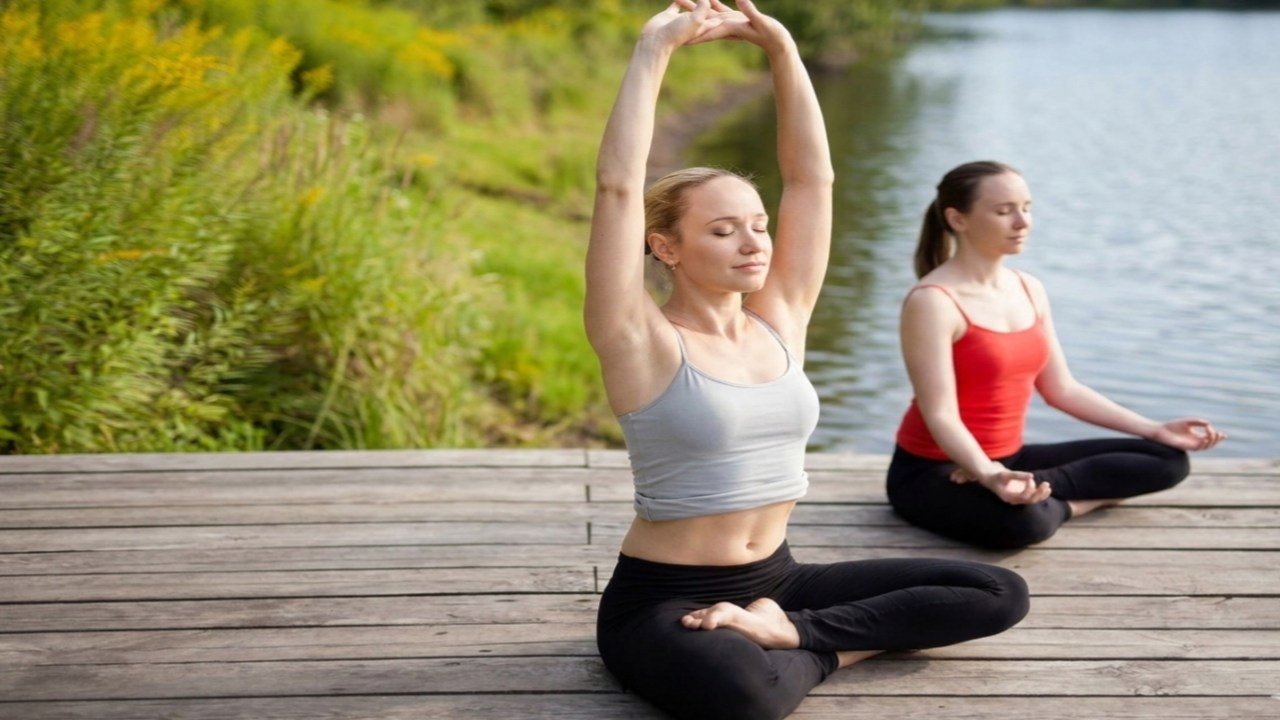
4 Simple Yoga Poses: In recent years, health experts and fitness professionals have increasingly highlighted the role of yoga in supporting respiratory health. Gentle stretching combined with controlled breathing techniques can help improve lung function, enhance oxygen flow, and encourage deeper breathing patterns. While yoga is not a replacement for medical treatment, certain poses are widely believed to support stronger lungs and better respiratory efficiency.
According to wellness sources and yoga practitioners, several traditional poses (yoga asanas) may help open the chest, strengthen respiratory muscles, and promote healthier breathing habits when practiced regularly.
Below are four yoga poses that are often recommended for improving lung capacity and breathing comfort.
1 – Cobra Pose (Bhujangasana)
The Cobra Pose is a gentle backbend that primarily focuses on opening the chest and expanding the rib cage. This posture helps stretch the lungs and may allow more air to flow during inhalation.
To perform this pose, practitioners lie face down on a yoga mat with their palms placed under the shoulders. While inhaling, the chest is slowly lifted upward while the lower body remains grounded. This position can help expand the lungs and strengthen the upper back muscles, which play a role in maintaining good posture and breathing efficiency.
Practicing Cobra Pose for about 15–30 seconds while maintaining steady breathing may help encourage deeper inhalation.
2 – Fish Pose (Matsyasana)
Fish Pose is widely known as a “chest-opening” yoga posture. It stretches the throat, chest, and upper abdomen, which may help improve airflow through the respiratory system.
In this pose, a person lies on their back and gently lifts the chest while supporting the head on the mat. This posture expands the chest cavity and may increase oxygen intake when paired with slow breathing techniques.
Many yoga instructors recommend holding this pose for around 30–45 seconds while focusing on slow, controlled breaths (deep breathing practice).
3 – Cat-Cow Stretch (Marjaryasana–Bitilasana)
The Cat-Cow Stretch is a dynamic yoga movement that synchronizes breathing with spinal motion. The sequence alternates between arching the back (Cow Pose) and rounding the spine (Cat Pose).
This rhythmic movement encourages flexibility in the chest and spine while improving coordination between movement and breathing. The gentle expansion and contraction of the chest during this exercise can support better oxygen flow and breathing awareness.
Experts often suggest repeating the movement for five to ten cycles while inhaling and exhaling slowly.
4 – Bridge Pose (Setu Bandha Sarvangasana)
Bridge Pose is another effective chest-opening posture that may help stimulate the lungs and diaphragm. In this pose, a person lies on their back with knees bent and feet placed flat on the floor before lifting the hips upward.
The lift in the torso opens the chest cavity and encourages deeper breathing, which may support lung expansion and respiratory muscle strength.
Practitioners typically hold this position for 30–60 seconds while maintaining steady breathing.
Why Yoga May Support Lung Health
Yoga practices often combine posture (asana), breathing techniques (pranayama), and relaxation. Together, these elements can encourage deeper inhalation, better oxygen circulation, and improved posture—all of which contribute to efficient lung function.
Regular yoga practice may also help reduce stress, which is known to influence breathing patterns. However, individuals with respiratory conditions should consult a healthcare professional before beginning new exercise routines.
Bottom Line
Simple yoga poses such as Cobra Pose, Fish Pose, Cat-Cow Stretch, and Bridge Pose are commonly recommended for promoting better breathing and supporting lung strength. While these exercises are widely practiced in yoga routines, their benefits can vary depending on consistency, technique, and individual health conditions.
As with any fitness practice, beginners are advised to start slowly, focus on proper breathing, and seek guidance from qualified instructors when possible.
Leave a Reply